
Sanford People Directory Landscape
Sanford people directories do not form one master list. Each official source records a different tie to the city or Lee County. The city directory identifies public offices and staff. School and college directories identify institutional roles. Tax records list parcel owners, while license boards list regulated professionals. Printed directories, telephone books, yearbooks, newspapers, and preservation files reach people who lived here in earlier decades.
| Local directory | People or roles listed | Keeper | Ways to use it |
|---|---|---|---|
| Sanford Staff Directory | City staff, council, departments, and public contact numbers | City of Sanford | Search names online, browse a category, or call the department |
| Lee County Schools Staff | District employees with names, roles, and profile images | Lee County Schools | Name filter, five browse pages, or district office |
| CCCC Faculty and Staff | College faculty and staff across its service area | Central Carolina Community College | Directory link from the college site or office contact |
| Lee Property Search | Individual and entity parcel owners | Lee County Tax Administration | Owner, address, PIN, account, CSV, and property-card routes |
| Professional boards | Licensed lawyers, clinicians, contractors, and other regulated fields | Issuing North Carolina board | Board-specific name, city, or license-number search |
| Historic Sanford directories | Past residents, businesses, spouses, occupations, addresses, and phone subscribers | Lee County Libraries and DigitalNC | Digitized scans, local-history inquiry, and archival research |
Start with the directory that describes the relationship being checked. A surname in the property roll means ownership, not residence. A staff result confirms an institutional role, not a home address. A historic entry records what a publisher gathered for that edition. These distinctions help separate namesakes and keep a search tied to what the source can prove.
Browse Sanford Government Directories
The Sanford Staff Directory is the clearest current government directory. It can search by first name, last name, or a detailed category. Categories cover City Council, the City Clerk's Office, Legal, Fire, Police, GIS, Community Development, permitting, zoning, public works, parks, and other public functions. A person who does not know an employee's name can browse the department and use its main phone number.
| Search control | Input type | Required | How it narrows the Sanford directory |
|---|---|---|---|
| Category | Dropdown | No | Selects a city office, service, council, station, or division |
| First Name | Text | No | Looks for the employee's given name |
| Last Name | Text | No | Looks for the employee's surname |
| Search | Button | To run a query | Applies the chosen name and category fields |
The official Sanford staff directory shows the live search and category choices.
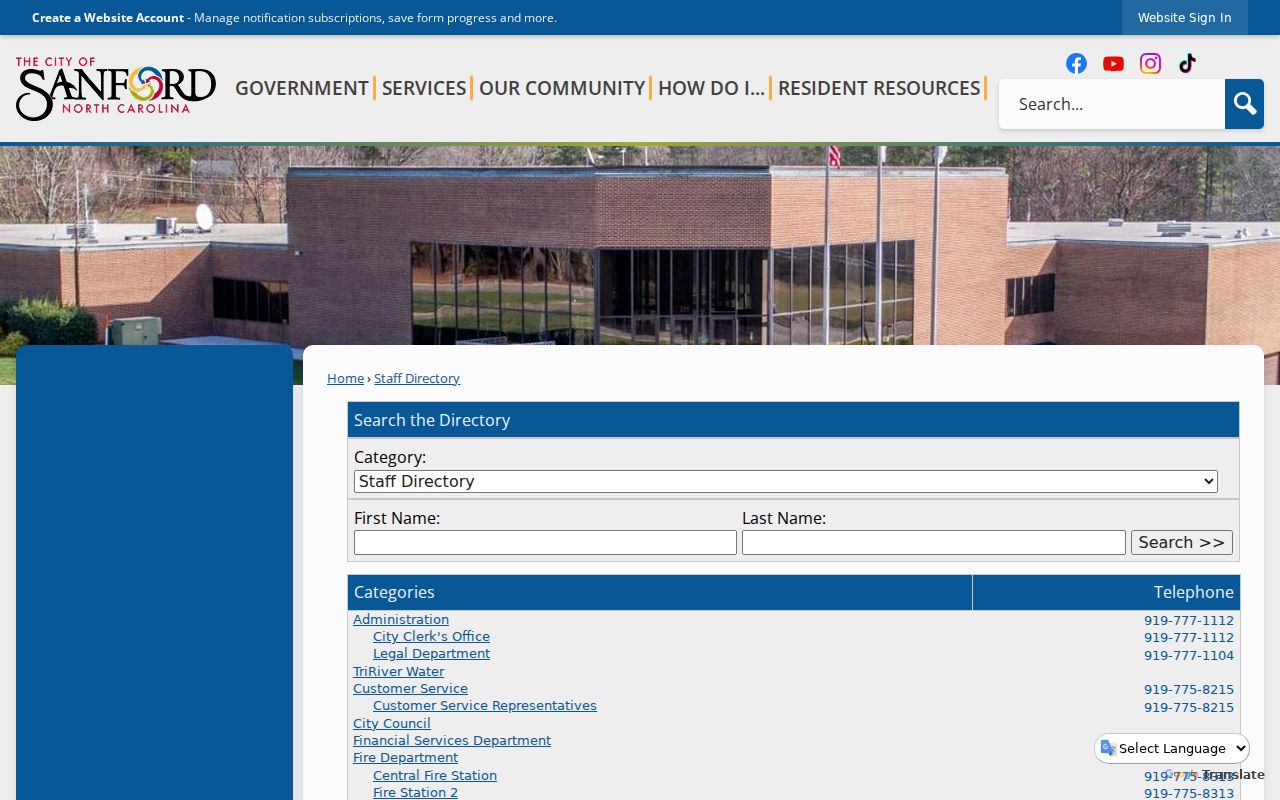
The directory's category list is useful when a name is unknown or a spelling is uncertain. If an individual entry does not render, use the shown department line. For older rosters, ask City Hall or search board packets and archive files rather than treating the current staff list as historical.
Sanford Education Directory Listings
Lee County Schools and Central Carolina Community College answer different directory questions. The district's staff tool has a name filter, five pages, and a jump-to-page control. Inspected entries show a profile image, full name, and role title. Its coverage extends beyond classroom teachers to district leadership, planning, communications, and support roles. The district office at 106 Gordon Street in Sanford is the fallback, with phone 919-774-6226.
The Lee County Schools staff directory demonstrates its name filter and paginated result list.
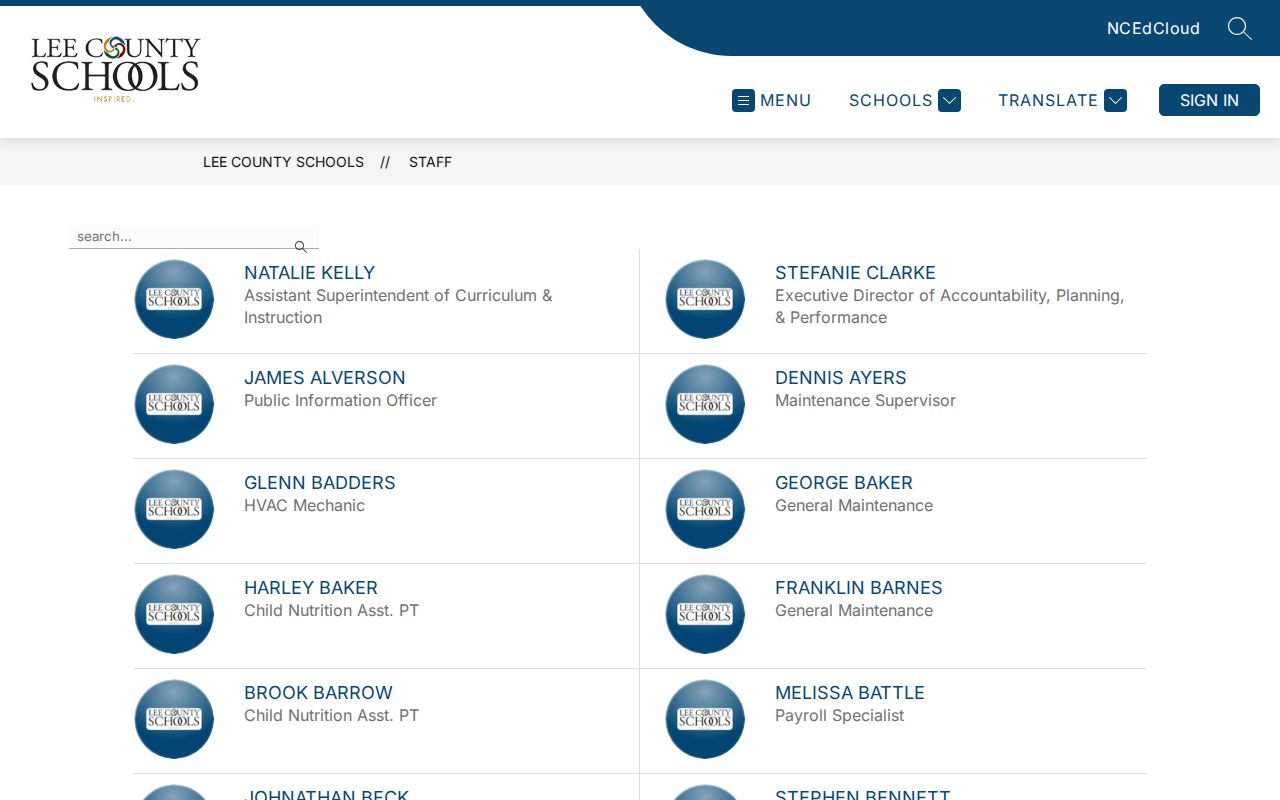
Each visible school entry supplies the key identity fields needed to distinguish staff with similar names: a profile image, full name, and role. Current details should still be confirmed through the district.
CCCC links faculty, staff, department, and office directories from its official pages, but the research did not verify the final staff-directory endpoint or every result field. The CCCC directory entry point is therefore the sound starting channel.

Use the faculty and staff route for a named person and the department route when only an academic program or office is known. College publications and library catalogs may preserve older faculty, student, and program names that no longer appear in a current directory.
- Full name: the primary match field in an employee listing.
- Role title: distinguishes the person's institutional function.
- Profile image: appears in inspected school-directory entries.
- Office or department: useful as the fallback when a direct profile is missing.
Sanford Property Owner Directories
Lee County Tax Administration runs Sanford's strongest official name-to-parcel directory. Search modes include owner, property location, parcel ID or PIN, mailing address, sales, and advanced criteria. A result can show the owner display name, separate physical and mailing addresses, account number, city tax jurisdiction, legal description, valuation, permit history, deed book and page, and recorded transactions. CSV export and a residential property-record card add useful output choices.
Open the Lee County real-property search online. If it fails, Tax Administration or GIS can supply an existing parcel card or record. Deed images and certified instruments belong with the Lee County Register of Deeds. The current deed vendor's exact web fields and native coverage were not verified, so they should not be guessed.
- Physical or situs address
- The place where the parcel lies.
- Mailing address
- The address used for tax correspondence, which may differ from the parcel.
- PIN
- The parcel identifier that links a map result with its tax profile.
- Book and page
- The citation used to locate the related recorded deed.
A Sanford postal line does not always prove that land lies inside city limits. Check the profile's tax jurisdiction and county GIS boundaries. A property-owner directory also does not prove who lives at the address. Historical city directories are the better resident source.
Note: The Sanford public records system explains access law, custodians, copy fees, and request procedure in greater depth.
Sanford Business and License Directories
Business and professional directories work best as a sequence of official sources. North Carolina's Secretary of State search can connect an organization name with its status, registered agent, principal office, and filing history. The assumed-name database covers filings made on or after December 1, 2017. Older assumed names must be checked with the Lee County Register of Deeds, which also remains the source for a certified copy.
The North Carolina business registration search accepts an organization name or a person's last, first, and middle names. State licensing boards then confirm a regulated credential. There is no complete statewide umbrella license directory, so choose the board for the field. Useful Sanford searches include the medical, nursing, general contractor, real estate, cosmetic art, and alcohol-permit boards.
The North Carolina State Bar lawyer directory is one example of a board-issued directory.
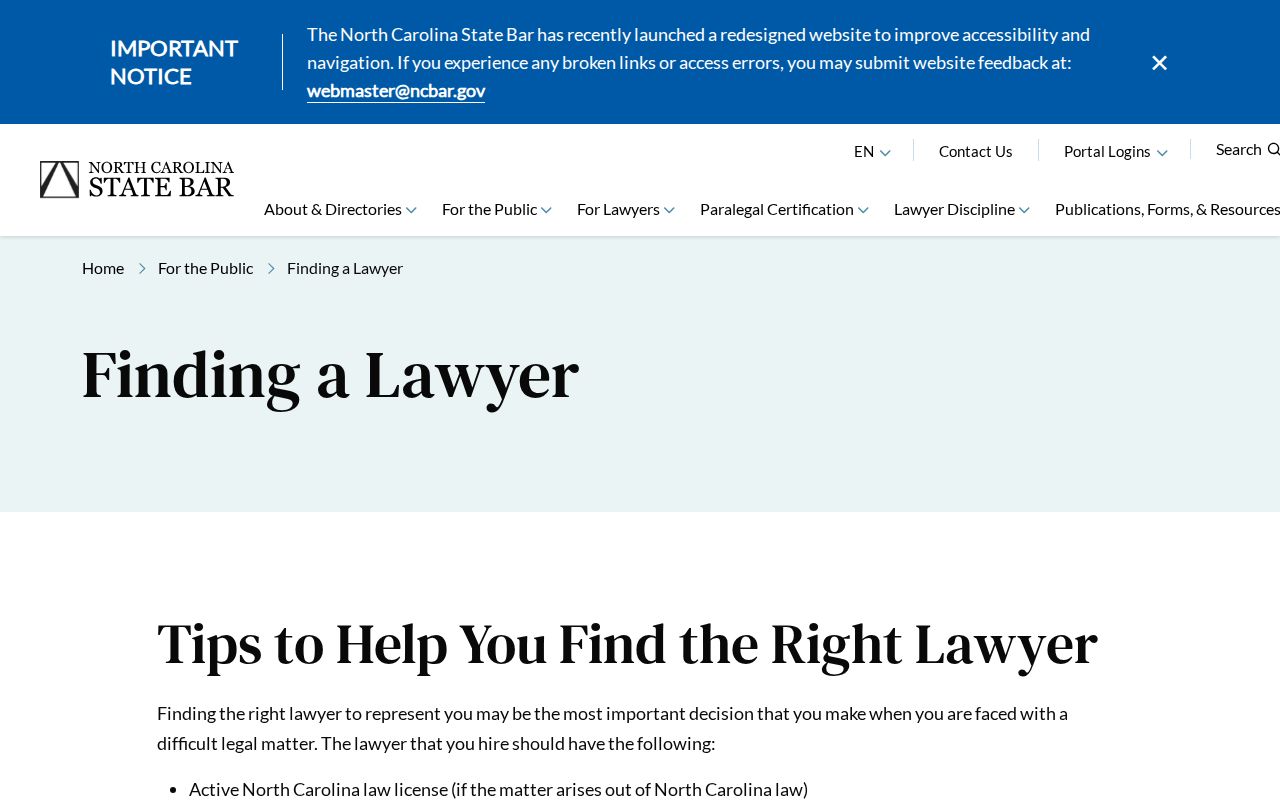
Its route supports checks by lawyer name, city, or State Bar number and can show public status and contact details. For another profession, use that profession's issuing board. No verified searchable Sanford chamber member directory was found, so a chamber list should not be substituted for a licensing record.
Sanford Library Directory Collection
Lee County Libraries and DigitalNC preserve the deepest Sanford people directories. A 2024 digitization batch added 15 Hill's Sanford directory volumes: 1954, 1964, and annual editions from 1966 through 1978. DigitalNC also holds a circa-1920s rural mail directory, a 1922 Sanford-Jonesboro-Broadway telephone directory, a 1962 Sanford High yearbook, club scrapbooks, and a large run of local newspapers.
Lee County Main Library
1740 Bragg Street
Sanford, NC 27330
919-718-4665
Call before travel to confirm exact printed directory, reverse-directory, phone-book, yearbook, microfilm, obituary, church, cemetery, and vertical-file holdings.
DigitalNC
Free digitized directories, yearbooks, scrapbooks, and newspapers contributed by Lee County Libraries and other North Carolina collections.
The circa-1920s Rural Mail Directory of Lee County shows the catalog record and digitized item.
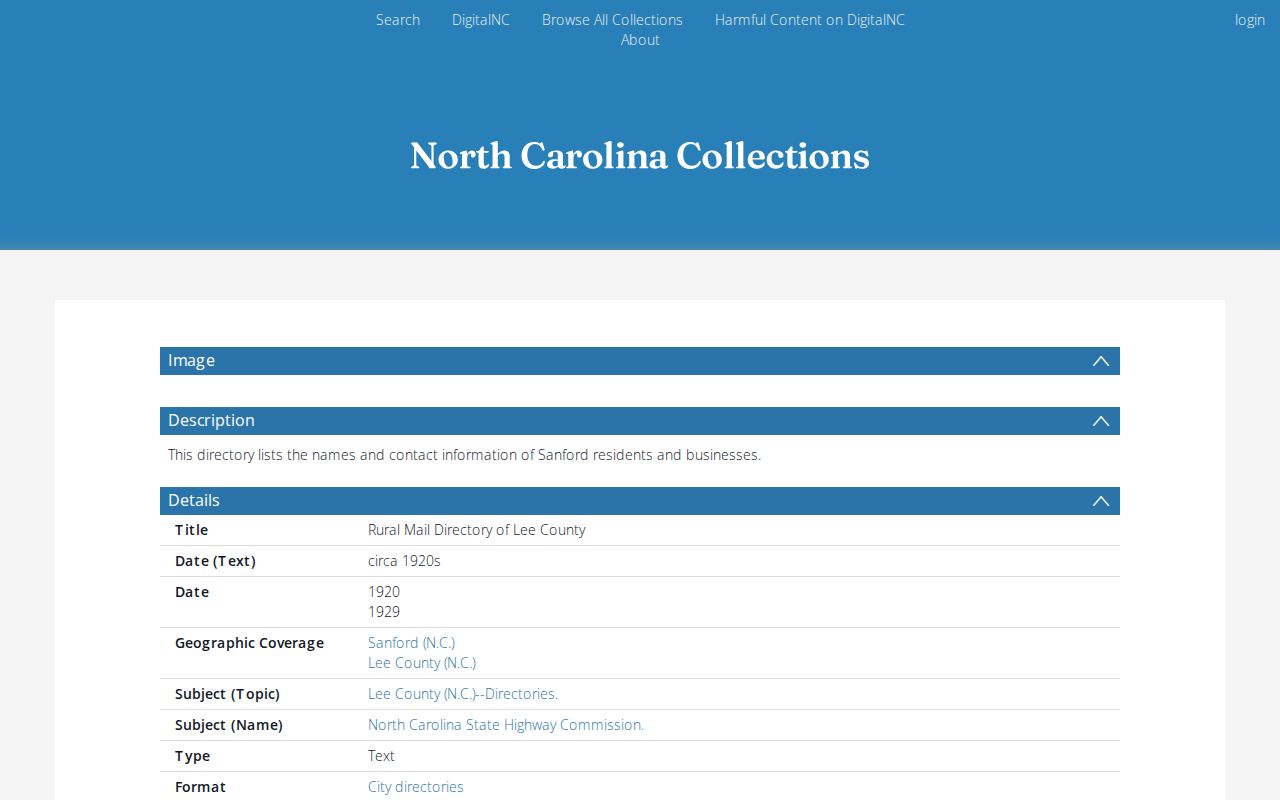
This directory preserves route-era names and contact details for Sanford residents and businesses. A rural-route entry may not map cleanly to a modern street. Pair it with census records, a deed, an old map, or a later city directory. The library can also confirm physical holdings that have not been fully cataloged online.
Reverse Sanford People Directories
The 1952 Hill's Sanford directory offers two reverse paths beyond its ordinary name alphabet. Its Street and Avenue Guide begins at page 417, while a numerical telephone directory appears opposite page 480. The same volume also indexes rural routes, churches, cemeteries, clubs, courts, schools, government offices, apartment buildings, and organizations.
Browse the digitized 1952 Hill's directory by the kind of fact already known. An old street address can lead to occupants and nearby names. A phone number can lead to a subscriber. The alphabetical entry may then add a spouse, occupation, or employer. Check the edition's abbreviation key before interpreting any mark.
Downtown numbering adds a Sanford-specific check. East-west street numbers begin at North Moore Street and rise outward, with streets taking East or West based on their side of Moore. That pattern can resolve similar street numbers in an old directory. It also helps match an entry to a historic map or preservation inventory.
Sanford Directories Across Jonesboro
Sanford merged with Jonesboro effective July 1, 1947. A person or address may therefore appear under Jonesboro in one directory and Sanford in a later volume without a move. The 1922 telephone directory is especially useful because it covers Sanford, Jonesboro, Broadway, and rural lines in one source. Search both place headings and nearby rural-route sections around the merger.
The 1922 Sanford-Jonesboro telephone directory preserves that multi-place arrangement. Another boundary matters for older records: Lee County was created in 1907 from parts of Moore and Chatham counties. Pre-1907 deeds, estates, court files, and marriage evidence may sit in a parent county even when the physical community later became Lee County.
This geography supports family-history work across renamed places and rural routes. It does not justify filling a source gap with an assumed occupant. Record the year, edition, heading, and exact entry, then compare it with an independent record.
Sanford Archive Role Directories
Sanford's Archive Center acts like a role directory hidden inside municipal files. It searches by keyword, archive category, time period, start date, and end date. Collections include board and commission directories, annual reports, budgets, permit reports, resident guides, preservation newsletters, agendas, and related city series. These records can establish when a person served as an official, applicant, consultant, board member, or public participant.
Search the Sanford Archive Center by surname first, then narrow by category and date. Try an organization, street, or project name when a personal name returns nothing. A current staff directory may have removed a former employee, but an old agenda or annual report can retain the person's role and date.
Historic preservation inventories extend the address directory. East Sanford research compares city directories with tax records, survey files, and Sanborn maps, while the Hawkins Avenue inventory uses a 1949 telephone directory and 1950 and 1954 city directories. The 1950 book marked owner occupants with “O,” but the abbreviation key and tax or deed record should confirm what that notation means.
Historical Sanford People Directories
The historical directory era has several documented layers, not one unbroken run. Sanford directories available online include the rural mail source from the 1920s and Hill's volumes from the 1950s through the 1970s. Preservation work also identifies a 1949 telephone book and an earliest located 1950 city directory. East Sanford research notes a real evidence gap between the 1938 Sanborn map and that 1950 directory, so no occupant should be invented for the missing years.
- Circa 1920s
- The rural mail directory preserves route-based Sanford and Lee County names.
- 1922
- The telephone directory covers Sanford, Jonesboro, Broadway, and rural lines.
- 1949 to 1954
- Preservation research links a telephone book, early Hill's directories, tax records, and maps.
- 1954 and 1964 to 1978
- The 2024 library batch supplies 15 digitized Hill's Sanford volumes.
Newspapers and yearbooks fill different gaps. The Sanford Express collection spans 1,711 issues from 1887 through 1937. A digitized 1962 Sanford High yearbook can connect names with classes and groups. Club scrapbooks may record people absent from government indexes. For records not online, use Lee County Libraries, the State Archives copy service or search room, and the FamilySearch Lee County catalog. FamilySearch access may require a free account, a FamilySearch Center, or an affiliate library.
A careful historic directory search preserves uncertainty. Exact first and last years for all printed Sanford directory series were not confirmed. No authoritative evidence of a Lee County courthouse fire or wholesale record loss was found. The verified gaps, publishers, years, and access limits are more useful than a smooth but unsupported timeline.
Note: Historic people directories can reconnect a family line or former classmate, but every address and relationship should be checked against another dated source.